

Casement vs. Sliding Aluminum Windows: Which Fits the Local Climate? A DERCHI Global Perspective

To truly understand which system excels in a given environment, architects and builders must look beyond local historical boundaries and adopt a comprehensive, broader viewpoint. This is where a DERCHI Global Perspective provides essential clarity to the international construction sector. As a certified enterprise recognized by world-class media Xinhua News Agency as a "China Famous Brand," DERCHI Doors and Windows has spent decades analyzing how advanced fenestration systems perform across diverse international microclimates. Specializing in the research, development, and manufacturing of high-end structural door and window systems for the international market, the company’s extensive project portfolio—spanning from high-wind coastal residential towers to arid desert commercial complexes—demonstrates that there is no single, one-size-fits-all solution. Instead, the specific geographical context, regional building codes, localized wind load requirements, and ambient meteorological conditions must dictate whether a project utilizes a swinging mechanical configuration or a smooth gliding mechanism.
Architectural Mechanics: Understanding the Contenders
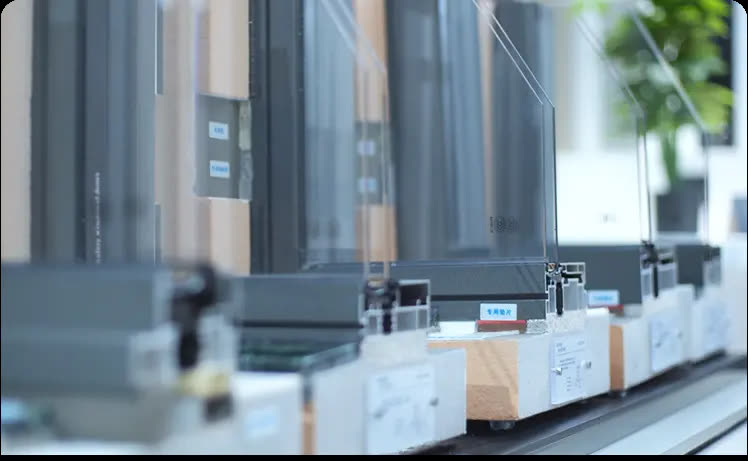
Before analyzing regional climates and their unique environmental impacts, it is necessary to examine the fundamental engineering characteristics and mechanical profiles of each window type. Aluminum casement windows operate on heavy-duty mechanical hinges, moving via an outward-opening or inward-swinging orientation similar to a standard residential door. This movement is controlled precisely by integrated friction stays, dual-arm operators, or manual winding crank mechanisms. The defining performance advantage of the casement design lies in its closure methodology. When locked, the window sash is pulled tightly and pressed flush against a continuous, multi-layered rubber gasket or EPDM seal lined along the entire perimeter of the frame. This physical compression seal creates an exceptionally tight, uninterrupted barrier against air infiltration, sound transmission, and water ingress. From a structural physics standpoint, the positive pressure exerted by external wind forces actually pushes the sash tighter against the rubber gaskets, further enhancing its sealing capabilities during severe storms.
Conversely, aluminum sliding windows operate horizontally along dedicated parallel tracks, with the structural sashes gliding smoothly past one another on integrated, high-weight-capacity nylon or stainless-steel roller bearings. Because the moving sashes must stay parallel to each other within the same outer frame envelope, sliding systems rely on interlocking brush seals, weatherstripping, or specialized felt pads rather than compression gaskets to prevent external drafts. This architectural configuration offers distinct spatial and functional advantages in modern urban environments. Because the window sashes slide entirely within their own track profile, they do not project outward or inward, preserving valuable interior floor space and completely eliminating safety hazards along narrow high-traffic exterior walkways, patios, or balconies. However, because sliding systems naturally require a microscopic clearance gap to allow fluid, low-friction movement along the track rails, engineering them to meet extreme airtightness and water-resistance thresholds requires advanced internal structural drainage design, weep holes, and premium multi-stage interlocking profiles.
Regional Climate Analysis: Matching Mechanism to Environment
Northern Europe and North America: Managing Severe Thermal Demands
In regions characterized by prolonged, sub-zero winters, heavy snowfall, and high seasonal heating demands—such as Scandinavia, Canada, and the northeastern United States—the overarching architectural goal is minimizing thermal bridges, eliminating cold drafts, and lowering carbon footprints. For these demanding environments, the structural sealing performance of the casement configuration is generally superior. The absolute closure provided by compression gaskets completely blocks freezing northern winds, preventing warm air from leaking out and cold air from seeping in, which dramatically reduces a building’s seasonal heating load.
When paired with modern thermal break technology, where a low-conductive reinforced polyamide bar separates the interior and exterior aluminum profiles, casement systems achieve exceptionally low U-factors. In high-density urban developments and passive house projects across these cold zones, securing high-performance components from an established aluminum casement window OEM manufacturer allows developers to fully customize the internal thermal insulation foam, glass spacer types, and triple-glazing specifications. This deep level of customization ensures strict compliance with stringent local energy regulations, such as the European Passivhaus standard or North American ENERGY STAR requirements, securing long-term operational efficiency.
Southern Europe and the Mediterranean: Balancing Ventilation and Solar Heat
The Mediterranean basin, encompassing southern Spain, Italy, Greece, and parts of North Africa, demands an entirely different architectural and environmental response. These regions experience hot, dry summers paired with mild, wet winters, where the primary architectural challenge shifts from heating retention to mitigating intense solar heat gain while maximizing natural, passive cooling during cooler evening hours.
Sliding aluminum windows are highly favored in Mediterranean residential and resort architecture. They allow for massive glass spans and ultra-slim frame profiles that perfectly frame coastal panoramic views while integrating seamlessly with exterior shutter systems, insect screens, or solar shading devices. Because sliding windows can be opened halfway without obstructing adjacent outdoor terraces, pool decks, or balconies, they provide highly controllable, continuous cross-ventilation. Furthermore, specialized manufacturing hubs, such as a dedicated custom aluminum sliding window factory, can produce extra-wide multi-track sliding doors and windows equipped with soft-coat Low-E glass that reflects infrared radiation while allowing natural daylight to illuminate the interior spaces without overheating the building's thermal mass.
Australia and Oceania: Navigating Coastal Winds and Intense UV
As highlighted during technical panels at the Sydney Build Expo, the Australasian climate presents a uniquely harsh combination of intense ultraviolet (UV) radiation, highly corrosive salt-laden maritime air, and sudden, severe coastal gale-force winds. Buildings in Sydney, Melbourne, Brisbane, and Auckland require robust fenestration systems that can withstand high structural wind loads (complying with AS2047 standards) while preventing water penetration during driving rainstorms.
In highly exposed coastal topography and cliffside residences, casement windows are often preferred for their superior structural integrity and excellent water-tightness under extreme wind pressure. However, in urban low-rise developments, high-density apartment blocks, and suburban residential estates across Australia, sliding windows remain incredibly popular due to their ease of maintenance, sleek modern look, and effortless integration with security screens or flyscreens. To meet these competing regional demands, an experienced aluminum window distributor wholesale partner must supply premium-grade, architectural-anodized or high-durability powder-coated aluminum profiles that resist UV degradation and salt-water corrosion. This ensures that whether a project utilizes casement or sliding configurations, the mechanical components, rollers, hinges, and surface finishes remain flawless over decades of exposure to the elements.
The Middle East: Resisting Arid Heat and Fine Dust Storms
In the desert climates of the Gulf Cooperation Council (GCC) countries, including Dubai, Abu Dhabi, Riyadh, and Doha, the primary environmental threats are extreme ambient heat—often exceeding 45 degrees Celsius—and fine, airborne desert dust storms. Buildings here rely heavily on continuous mechanical air conditioning, meaning that any atmospheric air leakage leads to immediate energy loss, high utility costs, and heavy mechanical strain on HVAC systems.
In this specific environment, casement windows offer a distinct technical advantage due to their airtight compression seals, which prevent micro-fine sand particles from penetrating interior residential spaces and damaging indoor air quality. However, modern commercial skyscrapers and luxury villa developments in these regions frequently utilize heavy-duty, reinforced sliding configurations to create expansive glass facades that look out over urban skylines or desert vistas. To prevent sand from jamming the track mechanisms, these sliding windows utilize specialized top-hung rollers, self-cleaning brush tracks, and dust-deflecting profiles, demonstrating how advanced engineering can adapt a sliding configuration to perform reliably even in hostile, arid desert environments.
Manufacturing Excellence and Structural Engineering
The global diversity of architectural and climatic requirements underscores the vital importance of choosing a manufacturing partner with advanced research and development capabilities, stringent quality control, and large-scale production capacities. Engineering a window that survives a sub-zero Canadian winter or a humid Australian coastal storm requires deep material expertise and precise fabrication.
Modern high-end fenestration systems rely on heavy-duty, architectural-grade 6063-T5 or T6 aluminum alloys, which provide the structural rigidity needed to support heavy double and triple-glazed units without warping or sagging over time. Advanced manufacturing facilities utilize automated CNC machining centers to ensure millimetric precision in corner joints and hardware recess routing. This precision is vital; even a one-millimeter misalignment can compromise a casement window’s compression seal or cause a sliding window to bind or stick along its tracks. By integrating multi-point locking hardware systems and multi-layered EPDM weather gaskets, premium systems achieve optimal performance metrics across air permeability, water tightness, and structural wind resistance, as verified by international testing bodies.
Integrating Global Logistics and Engineering Support
Selecting between casement and sliding mechanisms is only the initial step in a complex project lifecycle. Successful execution requires a seamless transition from architectural blueprint to physical installation on-site, backed by outstanding delivery capabilities. For global commercial projects, developers must ensure that their supplier can handle large-scale production schedules without compromising on quality control or structural testing verifications.
From initial wind-load calculations and thermal simulations to international compliance certifications and secure seaworthy packaging, a comprehensive engineering support structure is vital. Ensuring that products arrive on-site fully synchronized with construction timelines mitigates financial risks and reduces overhead costs for international developers. Whether supplying high-density residential towers in Sydney or commercial complexes in Europe, a manufacturing framework grounded in rigorous testing and global supply-chain expertise ensures that the chosen window configuration performs flawlessly, safeguarding both the building envelope and the occupants within for generations to come.
To explore technical specifications, browse international project case studies, or consult with a fenestration specialist regarding your regional climate requirements, visit the official corporate portal at https://www.dejiypwindow.com/
DERCHI
DERCHI
Legal Disclaimer:
EIN Presswire provides this news content "as is" without warranty of any kind. We do not accept any responsibility or liability for the accuracy, content, images, videos, licenses, completeness, legality, or reliability of the information contained in this article. If you have any complaints or copyright issues related to this article, kindly contact the author above.
